my [worldbuilding] wiki
Katharenia
Καθαρενική Δημοκρατία (Kathareni)
Kathareniki Dimokratia

Flag
Adelphótita, Elefthería, Dimokratía
(Lingua Communis: Brotherhood, Freedom, Democracy)
Tis Amýnis ta Paidiá
(Lingua Communis: The Children of the Defense)

Location and subdivisions of Katharenia
Capital:
Mycenaea
Common Languages:
Kathareni
Demonyms:
Kathareni, Katharenian
Government:
Unitary Parliamentary Republic
Legislature:
Parliament
Area:
~140,000 km² (54,054 sq mi)
Currency:
Kathareni Daktylos (ΔΚ)
The Kathareni Republic was established in 1918 succeeding the Kingdom of Katharenia. Economic stagnation, the unpopularity of the ruling foreign House of Althofen and King Constantinos I, and constitutional infighting over the interpretation of the constitution between the King and Parliament, which ultimately culminated in a military coup d'etat in Mycenaea and forcing the abdication of Constantinos I and subsequent departure. In the resulting power vacuum, the Kathareni Parliament declared the formation of the Kathareni Republic as a unitary parliamentary republic.
Geography
Katharenia, located in Southern and Southeastern Magna Europa, on the Hjalmarland Basin, Katharenia has the longest coastline out of all of its neighbours, spanning along their peninsular mainland and hundreds of coastal islands. The Kathareni mainland consists of a mountainous peninsula that juts into the sea, particularly along the provinces of Epirus, Patraeus, St. Stephan, Arkadion and Heraklion.
Out of all of the countries in the Hjalmarland Peninsula, Katharenia is covered approximately 70% with mountains, making the country the most mountainous compared to their northerly neighbours in the peninsula. Along the coast, and especially evident along the Pontus Islands, Leto Superior and Inferior, and the municipality of Mycenaea, provinces of Greater Mycenaea, Nikis and Argyros, the weather can reach 30°C in many areas. Inland, particularly in mountainous areas, the climate is more transitional between the humid Hochsee and the continental Magna Europa, with average summer temperatures reaching 20°C in most areas, cooler and less humid conditions than the coast.
History
Prior to the Republic's existence, Katharenia was a small and predominantly agricultural country that had remained economically underdeveloped and politically constrainted to foreign royal houses, with the last house being the House of Althofen. Under the governance of King Constantinos I, modernization efforts were limited as the monarchy clashed with Parliament over constitutional intrepretation and authority, with the King exercising his power to veto legislation and dismissing ministers, contributing to government paralysis.
In late 1918, Black Monday, a severe global economic downturn originating from Northern Magna Europa, would arrive to Katharenia. Offers for foreign loans disappeared, the Kathareni monarchist government suspended payments on their foreign debt and had the Kathareni Daktylos taken off the gold standard, leading to the devaluation of the Daktylos and accelerating financial instability.


King Constantinos I, facing widespread discontent in army contingents and lacking international backing, abdicated as the King of Katharenia and fled the country along with members of the House of Althofen. Days following the military coup, Parliament reconvened under military protection and voted on the establishment of the Kathareni Republic, signalling the end of the monarchy and the beginning of a modern parliamentary regime.
Kathareni-Moesian War
The Kathareni-Moesian War, or colloquially known in Cassander and Thermaios, as the War of the Telegraph Station was a conflict between the Tsardom of Moesia and the Kathareni Republic. This conflict was concurrent with the political crisis and vacuum in Katharenia.
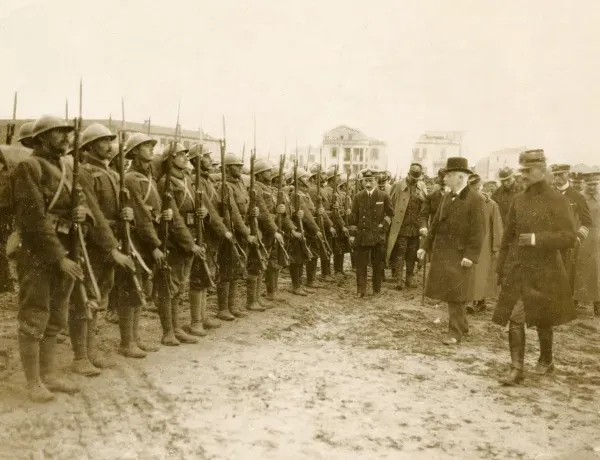
1st Feb: Moesian Irredentism flares in Cassander and Thermaios amid political chaos in Katharenia.
Late Feb: General mobilization called in Moesia and troops mass near Kathareni-Moesian border.
Early March: Alleged Kathareni Royalists raid a Moesian telegraph station in a border town.
15th March: Moesia issues an ultimatum demanding the extradition of alleged attackers and tried in Moesian courts.
Late March: Kathareni government rejects ultimatum, Moesian invasion begins, crossing into Cassander.
Early April: Northern Cassander falls to Moesian forces. Moesian forces also enter the outskirts of Thermaios.
5th April: Habeas Corpus is suspended allowing Kathareni officials to arrest suspected Royalists, saboteurs and Moesian agents.
8th April: Siege of Thermaios begins, evacuation of civilians via sea begins, assisted with the Kathareni Navy.
Late April: Moesian propaganda announce liberation of Cassander and 'emancipation' of Cassander's Moesian population.
Early May: Parliament grants emergency powers to the Republican government.
Mid May: Kathareni defenses consolidate, slowing the Moesian advances into a halt.
Late May: Heavy fighting along Cassander and besieged Thermaios. Both armies face large casualties.
3rd June: Operation Thunderbolt begins, Kathareni breakthrough in Moesian lines allow connection to besieged Thermaios, lifting the siege.
Late June: A Moesian regiment accidentally crosses into Sarmatian borders during a flanking maneuver.
30th June: Moesian troops shell the small Sarmatian village of Stara Gora, presumed by Moesian troops to hold Kathareni partisans.
1st July: The Sarmatian Principality issues warning to Moesian Government, threatening intervention following shelling.
2nd July: Moesian High Command halts all operations, worrying for a potential escalation into a two front war.
5th July: The Sarmatian Principality offers a ceasefire to Moesia and Katharenia.
7th July: The Kathareni Republic accepts, no response from the Moesian government.
14th July: Moesian government accepts.
16th July: Armistice and Treaty signed in Korinthia, end of hostilies between the Kathareni Republic and Tsardom of Moesia.
Out of the war, it ended in a status quo ante bellum, meaning that there was no territorial changes. Out of the Treaty provisions in Korinthia, the Tsardom of Moesia had to pay reparations for their invasion on Kathareni territory.
Politics
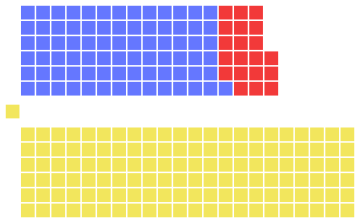
Yellow is the governing Liberal Democratic National Party of Katharenia
Blue is the opposition Conservative Coalition
Red is the opposition Kathareni Social Democratic Worker's Party
Members of Parliament, are elected in direct elections, along with a system of 'reinforced' proportional representation, which often favours the party that has won a plurality of the vote. This system often leads to the formation of stable single-party governments. The Chamber of Deputies has 231 seats in total and a government majority requires a 116 seat majority.
Following the establishment of elections in Katharenia, the politics of the Kathareni Republic was largely dominated by the liberal Liberal Democratic National Party and the conservative-royalist sympathetic Conservative Coalition. Following general elections saw the entrance of the Kathareni Social Democratic Worker's Party, as a larger continental wide movement of worker's rights and social democratic ideals.
Economy
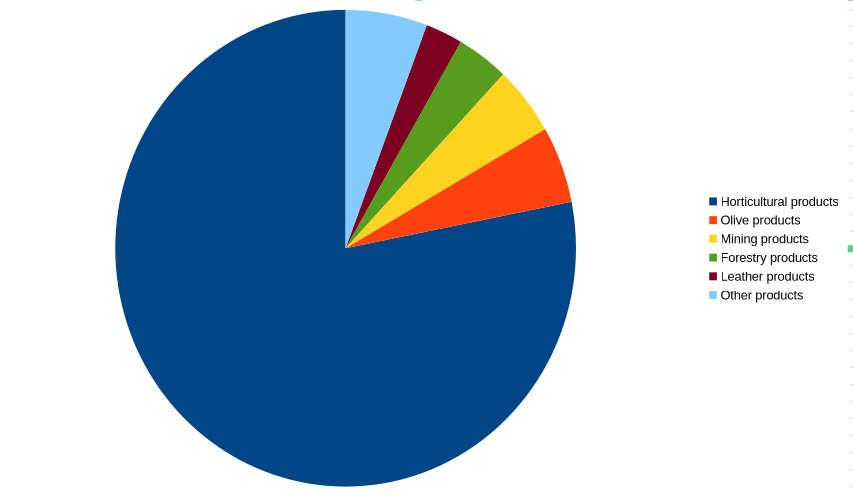
Industrial efforts would begin during the last years of the monarchy and continued following the establishment of the Republic. These efforts focused on light manufacturing like textiles, food processing, infrastructure building, and expansion of Thermaios' shipbuilding industry. These efforts were mainly centered in Mycenaea, Thermaios, Eirenai and Korinthia. These implementations were often uneven with limited electrification, inadequate infrastructure and limited investments.
Following Black Monday in 1918, heavy indirect taxation and land taxes would make up the bulk of the Republic's income as export prices sharply rose. This heavy taxation placed a significant burden on rural families and urban workers. The collapse of agricultural export prices caused significant declines in income in rural areas sprouting discontent years leading up to the coup.
Despite the Republican government launching programs for modernization, progress would remain uneven, hampered with the early political instability of the Republic, the outbreak of the Kathareni-Moesian War, and continued dependence on agricultural markets slowed the transition from an agricultural exporting economy to a modern diversified economy.
Foreign Relations
The foreign relations of the Kathareni Republic is largely shaped by the upheavals of the fall of the monarchy, the establishment of the Republic and the Kathareni-Moesian War. The recent establishment of the Kathareni Republic, it seeks to maintain political independence and sovereignty, deter irredentist claims and promote regional stability while avoiding great power rivalries in Magna Europa.
Katharenia's relationship with their smaller neighbour, Little Sarmatia remains neutral and pragmatic. While the two countries have little strategic overlap, they do cooperate on issues regarding safety on the Morean Sea. Little Sarmatia's ties with the Sarmatian Principality contribute to a stable relationship between the Kathareni Republic and Little Sarmatia.
The relationship between the Kathareni Republic and the Tsardom of Moesia remain tense and hostile. The recent Kathareni-Moesian War sparked over Moesian irredentist claims over Cassander and Thermaios still continues to define bilateral relations. Katharenia's northern borders remain heavily militarized, diplomatic talks have stalled over mutual accusations of sabotage and espionage, troop buildups and propaganda. While both nations maintain embassies, on the Hjalmarland Peninsula, their relations is widely regarded as the coldest.
See Also
- 5 January 1919 Revolution